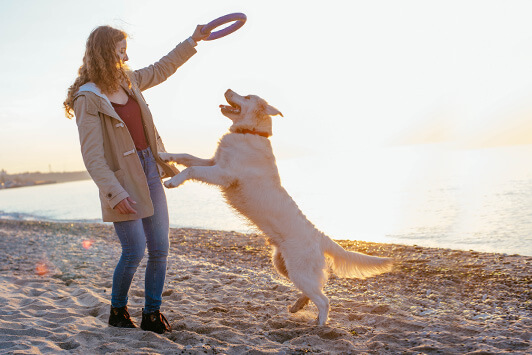
As your dog gets older, are they showing signs of slowing down? Arthritis in dogs and cats can potentially be treated, giving your dog an active life for years to come.
Here are seven common signs that may indicate your dog has arthritis or other joint problems:
1. Limping
Did your cat land wrong when jumping off the couch or is it a sign of something else? If your pet's limping seems to be related directly to a potential injury, it's important to have it checked out by a vet.
But if your dog seems to regularly have issues with limping, it may be a sign of a developing condition that could impact their joint health.
2. Stiffness
Many of us dog owners relate to the extra time it takes to get going in the mornings or during cold weather. Just like us, arthritis may be to blame more than old age. When your pet's joints hurt, they don't want to move as much, and who could blame them? The trouble is, this causes their muscles to become even tighter and stiffer after long periods of time without activity.
3. Problems Moving or Standing
Tight muscles and achy joints can also keep your dog from wanting to move as much as they used to. You may notice that your dog has problems standing up or moving around, almost as though their muscles are bound.
This isn't far from the truth — the lack of use and limiting motion can cause your pet's muscles to atrophy, making early treatment of arthritis in dogs and cats important.
4. Refusing Normal Activities
Is your dog no longer wanting to jump, climb or run as they once did? When joint disease and arthritis make these activities painful, your dog may not want to partake in them anymore. Though this could be a temporary situation, make sure to pursue treatment options if the behavior continues for more than a few days or weeks.

5. Snapping
Your precious pet may be the friendliest animal on the planet, but if they have suddenly become grumpy it's important to find out why. If an animal is in pain, touching may add to their discomfort. That's why it's vital to take a dog to the vet if you see them reacting to being petted or touched in certain areas.
6. Licking Sore, Swollen Joints
Animals lick their bodies to soothe pain — licking sore joints is no exception. When your dog spends significant amounts of time licking their joints, it's a good indicator that the underlying area is painful for them.
Some animals that are in pain can even end up creating bald spots from the continuous licking. The good news is that this is something you can easily watch for and monitor.
7. Shying Away from Attention
When your social butterfly has become a wallflower, it's because your dog is having a slightly different response to the snapping symptoms listed above.
To avoid pain, your precious pet is trying to avoid being petted, lifted or played with. It's vital that these symptoms be treated relatively quickly, before the temporary behavior becomes a permanent pet problem.
---
By keeping an eye out for some of these symptoms and involving your veterinarian early, you may be able to help avoid years of chronic pain for your dog. For more advanced arthritis and joint treatments, talk to your vet about options such as cold laser therapy and underwater treadmills.
Pet parents in the know often turn to dog supplements and cat supplements that specifically support joints. Agility Formula for dogs and cats not only addresses joint health, but supports the entire musculoskeletal system. If you have a dog approaching middle age or just want to be proactive as they get older, try our Agility Formula and see what a difference it can make!