



Loading blog posts…
Nationwide delivery in just 1-3 days.
Showing Pet Advice & Ideas · View all posts

This holiday season, we’re especially pleased to bring you news of yet another financial award given by the Dr. Jane’s HealthyPetNet Foundation, this time to an inspirational organization of animal rescuers in Pennsylvania.
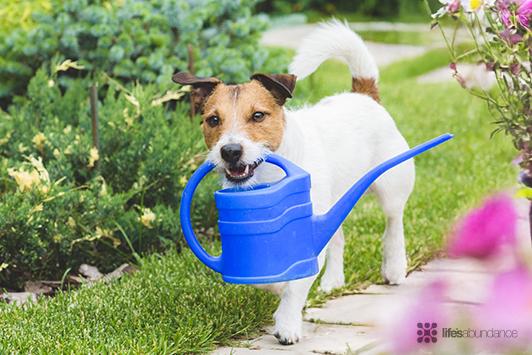
The holidays are fast approaching and, amid the hustle and bustle, many people choose to adopt a new puppy into their homes during the holiday season. If you are the proud pet parent of a brand new puppy, here are some great tips on how to best take care of your new bundle of joy during the cold-weather months.

Sun Protection – As we age, our skin is exposed to countless hours of sun. Constant, unprotected exposure can eventually result in what we commonly refer to as age spots. Ranging in all different sizes and shapes, these spots can appear on any area that has been exposed to the sun’s rays – your hands, arms, legs and, unfortunately, even your face. In order to decrease the risk of the appearance of these spots, you must protect your skin from the damaging rays of the sun. These rays come in two different wavelengths, UVA and UVB. UVB rays, while shorter than UVA, make our skin burn when overexposed. UVA rays, which penetrate deep into the skin’s layers, damage our collagen fibers … creating those dreaded wrinkles and leathery-looking skin. The best form of protection (besides staying indoors during daylight hours) is to use a broad-spectrum sunblock that protects against both UVA and UVB rays.
Having multiple pets increases everything: the joy, the cost, the hair, and the cuddles. As a veterinarian, I am often asked for advice on how best to integrate a new pet into a home that already has resident animals. In this post, I’ll be focusing on dog-only and cat-only households.
While underappreciated or even unrecognized as an organ, skin has amazing properties. For starters, it’s the largest organ of the body. Both tough and pliable, skin has many functions, including regulating body temperature, helping to prevent dehydration and protecting against injury and disease. Without skin, our pets couldn’t have hair, and everything that was on the inside would be exposed, making snuggle sessions a little on the icky side!

Subjected to physical and mental abuse in a North Carolina product-testing laboratory, the dogs came to Palm Beach County after an undercover investigation publicized their plight. The laboratory closed, turning over all of the nearly 200 animals used in experiments to various East Coast humane agencies, including Wellington’s In Dog We Trust (IDWT). Founded by Nicole Brown, IDWT is a non-profit, no-kill animal shelter that opened just this summer on the 20-acre property of what used to be the Folke Peterson Wildlife Center, a wildlife sanctuary shuttered in 2009.
You keep your dogs and cats healthy, but are you taking care of yourself? Here's why your own wellness matters for your animals.
As uncertainty about the economy lingers, the pace of pet abandonment is on the rise. These are five ways you can help abandoned pets in your area.
First, take her to your veterinarian for a full checkup. Your veterinarian will be able to determine how far along she is and if there are any health concerns. Second, provide complete and balanced nutrition. More than any other factor, nutrition will influence the health of mother and kittens. Cats are pregnant for approximately 8-9 weeks. Like humans, cats gain weight gradually throughout their pregnancy. By the end of her pregnancy, your cat should be eating 25-50% more than her normal amount.